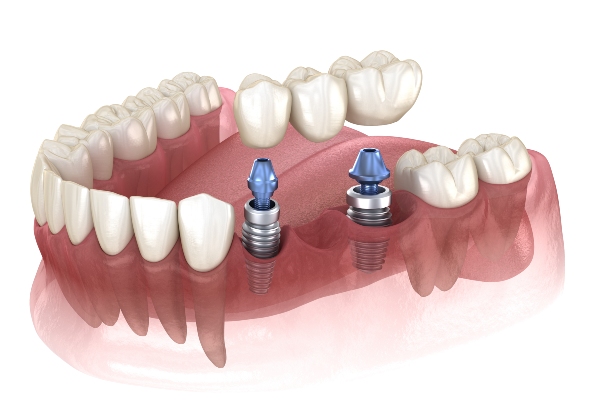
Dental implants are effective, long-lasting artificial teeth. Implants are surgically attached to the jawbone to look and function like natural teeth. As a result, patients can chew, talk, and laugh without worrying about dentures slipping. They also improve oral health. This article explores when and why to get implants and the qualifying factors for treatment.
Who should get dental implants?
Patients choose implants over dentures and dental bridges for greater comfort, convenience, and durability. There is no set time to get implants; rather, there are common dental conditions and lifestyle factors that steer a patient toward this long-lasting dental restoration. Below are the most common reasons why patients decide to get dental implants.
Missing teeth
Most patients get implants when they are missing teeth. Although dentures are the traditional solution to missing teeth, dental implants are a more natural-looking and functional solution. Implants can replace a full set of missing teeth. However, if just one tooth is missing, a single implant may replace it.
Broken teeth
Sometimes, dental professionals cannot save a patient's broken tooth. However, if the patient has severely chipped, cracked, or otherwise broken teeth, it may be time to get dental implants. The dentist can remove and replace broken teeth with implants, restoring the patient's smile. This treatment method has both aesthetic and functional benefits; the patient can use their teeth easily and confidently.
Infected teeth
Infected teeth are often salvageable. Sometimes, however, it is necessary to extract an infected tooth. Then, a functional implant can replace the lost tooth, giving the patient a pain-free and restored smile.
Loose dentures
Patients who have tried but did not like dentures may qualify for dental implants. Dentures can be loose, fit poorly, and leave the jawbone unstimulated, causing a sunken-in facial appearance. In contrast, implants keep the jawbone engaged as they act like natural teeth. This can prevent and even fix any facial collapse.
Looking for a permanent tooth replacement
Finally, patients get dental implants when they want a permanent tooth replacement treatment that does not require major lifestyle changes. For example, there is no need to take implants out at night or use dental adhesive to keep them in place. Rather, caring for implants is the same as caring for natural teeth — regular brushing, flossing, and dental visits constitute proper care.
How to qualify for dental implants
The dentist will examine the overall health of the oral cavity before the procedure. This is partly to ensure that the conditions are right for osseointegration, the process in which implants fuse with the jawbone. Without proper osseointegration, the implants will not be able to work as natural teeth and will likely fail.
Some patients may benefit more from dentures if they have significant bone loss, diabetes, or rheumatoid arthritis. These conditions can get in the way of proper healing, again causing implant failure. However, some patients may still be eligible; for example, a bone graft may help a patient recover lost bone mass to prepare the mouth for implants.
Learn more about dental implants
Looking for a way to replace teeth without dentures? Dental implants may be the answer. Call our office for more information on implants.
Request an appointment or call Autumn Heights Dental at 210-245-4184 for an appointment in our Converse office.
Related Posts
Many people assume that only a small group qualifies for dental implants. On the contrary, a wide range of adults are eligible to replace teeth with this popular smile restoration. To start, most candidates simply need to be in good health, have a strong jawbone, and practice good oral hygiene. A dental provider looks at…
Dental implants replace tooth roots, anchoring right into the jawbone. They support natural chewing forces, protect the jawbone from tissue loss, and stabilize confident smiles. This design makes them a smart investment for those seeking a long-term solution to replace missing teeth. While dental implants can last a lifetime, their longevity depends on proper care…
When someone is missing one or more teeth, it will affect not only their ability to eat, but also the health of their jawbone and face structure, and this can all be corrected with dental implants. As an additional concern, these implants can improve your smile, which will be good for their confidence level and…